IVF/ICSI Frozen Embryo Transfer
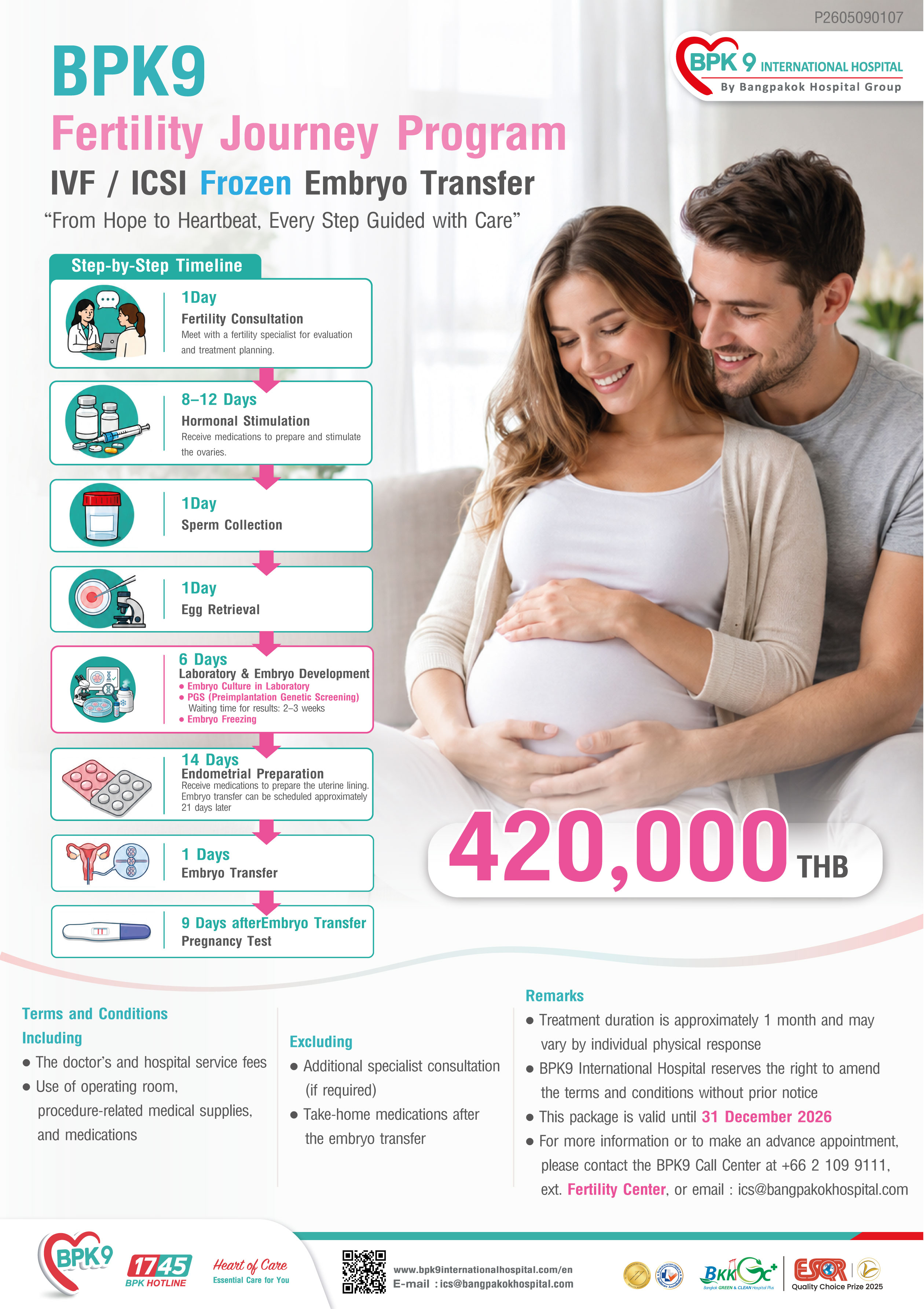
What Is Frozen Embryo Transfer (FET)?
Frozen Embryo Transfer (FET) is a fertility treatment procedure in which previously frozen embryos are carefully thawed and transferred into the uterus to achieve pregnancy. These embryos are typically created during an earlier In Vitro Fertilization (IVF) cycle and preserved using advanced cryopreservation techniques for future use.
FET has become an increasingly popular and successful option in assisted reproductive technology, offering patients greater flexibility and the opportunity to optimize the timing of embryo transfer based on their individual health and reproductive needs.
At BPK9 International Hospital, our fertility specialists combine advanced reproductive technology with personalized care to provide the highest standards of treatment and support throughout every stage of the fertility journey.
How Does Frozen Embryo Transfer Work?
The Frozen Embryo Transfer process involves several carefully planned steps:
- Embryo Cryopreservation
Following IVF treatment, high-quality embryos are frozen and stored using state-of-the-art vitrification technology, which helps preserve their viability for future use.
- Endometrial Preparation
Before the transfer, the uterine lining is prepared through natural or hormone-supported cycles to create the most favorable environment for embryo implantation.
- Embryo Thawing
The selected embryo is carefully thawed by experienced embryologists using specialized laboratory techniques.
- Embryo Transfer
The thawed embryo is gently transferred into the uterus through a simple, minimally invasive procedure that typically does not require anesthesia.
- Pregnancy Testing
Approximately 10–14 days after the transfer, a pregnancy test is performed to determine whether implantation has been successful.
Who May Benefit from Frozen Embryo Transfer?
Frozen Embryo Transfer may be recommended for:
- Patients who have frozen embryos from a previous IVF cycle
- Couples wishing to expand their family in the future
- Women requiring additional time for uterine preparation before embryo transfer
- Patients undergoing fertility preservation before medical treatments
- Individuals seeking to reduce the physical and emotional demands of repeated ovarian stimulation and egg retrieval procedures
Our fertility specialists carefully evaluate each patient's circumstances to determine the most suitable treatment approach.
Advantages of Frozen Embryo Transfer
Greater Flexibility
Patients can schedule embryo transfer at a time that is medically optimal and personally convenient.
Reduced Physical Burden
Because embryos have already been created and stored, patients can avoid undergoing another egg retrieval procedure.
Optimized Uterine Environment
The transfer can be performed when the uterine lining is best prepared to support implantation and pregnancy.
Efficient Use of IVF Cycles
Frozen embryos from a previous IVF cycle can be utilized without repeating the entire fertility treatment process.
Long-Term Fertility Preservation
Embryos can remain safely stored for future family planning needs, offering greater reproductive flexibility.
What to Expect After the Procedure
Following a Frozen Embryo Transfer, most patients can return to their normal daily activities shortly afterward. Medications may be prescribed to support implantation and early pregnancy development. During the waiting period before pregnancy testing, patients are encouraged to follow their physician's recommendations and maintain a healthy lifestyle.
Every fertility journey is unique, and treatment outcomes depend on various factors, including age, embryo quality, uterine health, and overall reproductive conditions.
Heart of Care Essential Care for You